Skip to content
Hank ElleryThe Counter, Stove & Block Library

Three plainspoken handbooks by Hank Ellery

Bring home better meat and waste less of it

Learn what to buy, how to cook it safely, and how to keep every useful piece.

Sound on — Hank Ellery explains everything in 3 minutes

At the CounterAt the StoveAt the Block

Press play with the sound on to hear how the three books work together.

The video is unavailable. Everything it covers is written below.

Read the transcript

Most folks walk up to a meat counter and buy the prettiest package. Bright red. Big picture on the label. Highest price per pound.

I spent forty-one years on the other side of that counter, in a little farm-town grocery in Missouri. I cut beef before the doors opened and ran the grinder nearly every morning. And I watched good people overpay for meat, then cook it wrong, then throw half of it away.

Not because they were careless. Because nobody ever showed them.

Nobody told them the cheap end of the animal, cooked right, beats the expensive cuts. Nobody showed them how to read the small print on a package, or why a gray center in ground beef is not always spoiled. Nobody taught them to slice across the grain, or that a tough pot roast usually needs more time, not more heat.

So I wrote it down. Three books. I call them The Old Butcher's Counter.

Book one is At the Counter. How to buy meat like a butcher. Reading labels, spotting added water, judging a package, and the good cuts most people walk right past.

Book two is At the Stove. How to cook those cuts. Cast iron, steady heat, patience, and a thermometer. Steaks, pot roast, stew, ribs, chops, chicken, burgers, meatloaf, bacon and sausage.

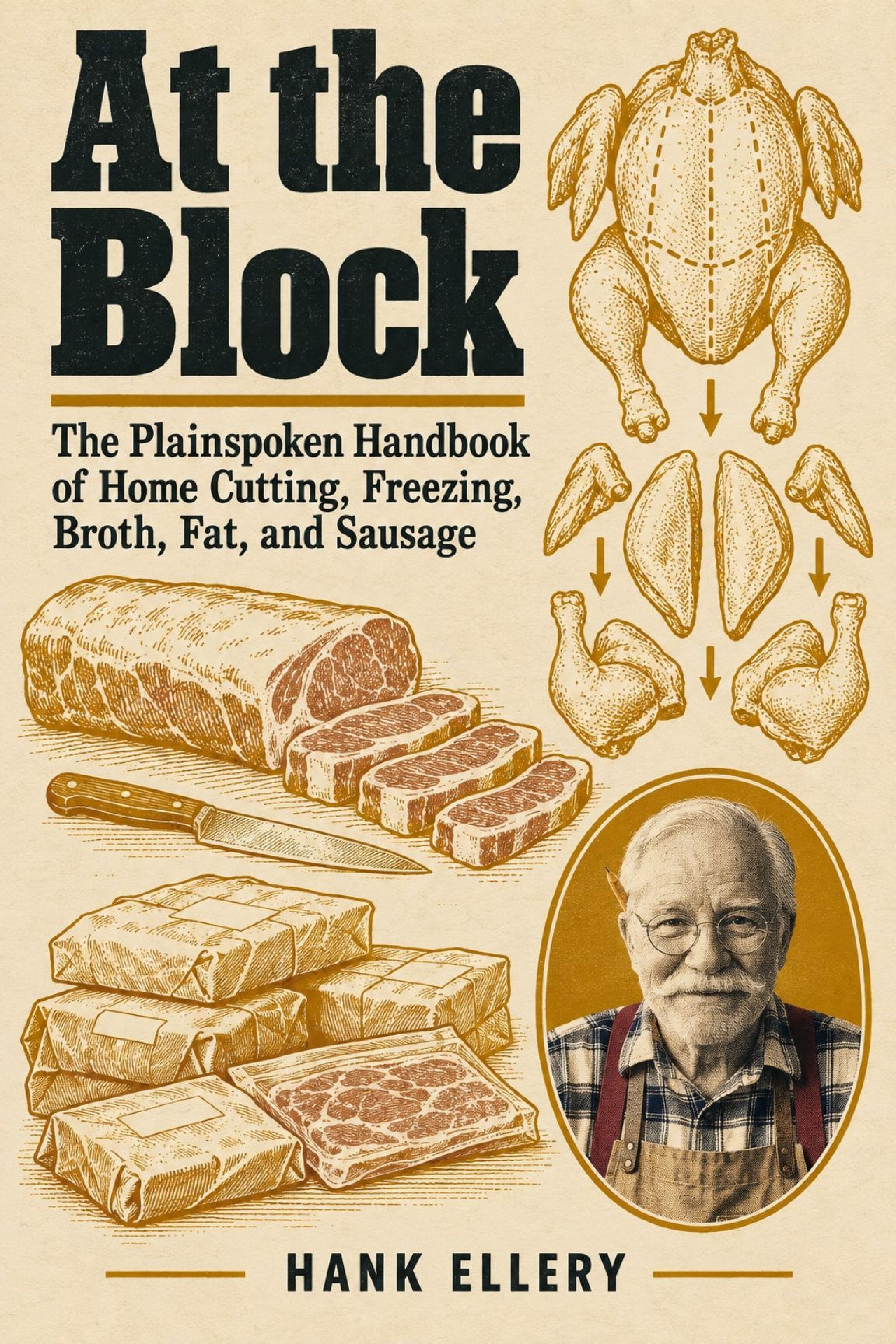
Book three is At the Block. The knife work and the keeping work. Cutting up a whole chicken, turning a whole pork loin into planned meals, fresh sausage, broth from bones, the grease jar, and wrapping meat so the freezer does not ruin it.

Buy it right. Cook it right. Cut it right. That is the whole idea.

All together it is about two hundred fifty pages. There are checklists and quick-reference tables you can keep by the stove. The safe cooking temperatures and storage times were checked against USDA food-safety guidance.

Now, this is not for somebody who wants fancy restaurant cooking. It is for home cooks who want better meat for less money and suppers that come out right.

You get all three books as instant PDF downloads. One payment. No subscription.

And if they do not earn their place in your kitchen, email within thirty days and you get every cent back. No questions asked.

The button is right below this video. Go ahead and pick them up.

I'll see you at the counter.

Instant download · Read on your phone, tablet or computer, or print the pages

3 Books · 253 Pages · 30 Chapters · 6 Methods · 7 Tables · 6 Checklists · 21 Glossary terms

3Books
253Pages
$29Your order

The Counter, Stove & Block Library

Good meat is often hidden behind poor choices

A broad tray, a bright label, and a high price do not tell you how much useful meat you are taking home. A little knowledge at the counter prevents trouble at the stove and waste at the freezer.

  • Two packages look alike, but one contains added solution, more bone, or less net weight. Without reading the small print, you cannot make a fair comparison.
  • A working cut browns nicely but stays tough because browning, safe doneness, and tenderness were treated as the same thing.
  • Thin chops, lean burgers, and chicken breasts turn dry because they were cooked like thicker or fattier pieces.
  • Bones, fat, trimmings, and extra portions go into one freezer bag without a date or plan. Months later, nobody knows what is worth keeping.
Get all 3 books $29

Instant download · Read on your phone, tablet or computer, or print the pages

The books

The Counter, Stove & Block Library

At the Counter

The books / 01

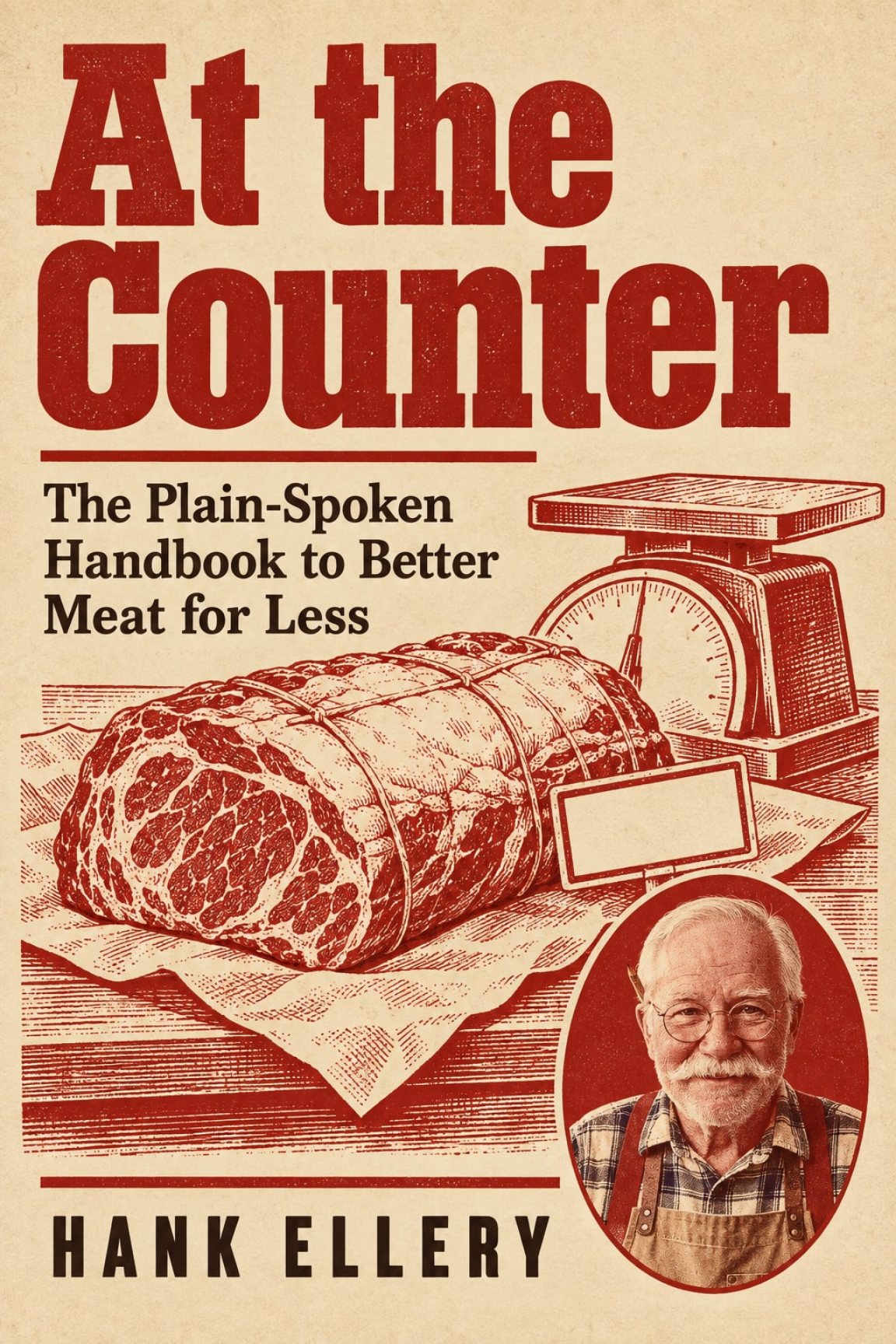
At the Counter

The Plain-Spoken Handbook to Better Meat for Less

Judge the product name, net weight, package condition, and qualifying language before judging the picture.

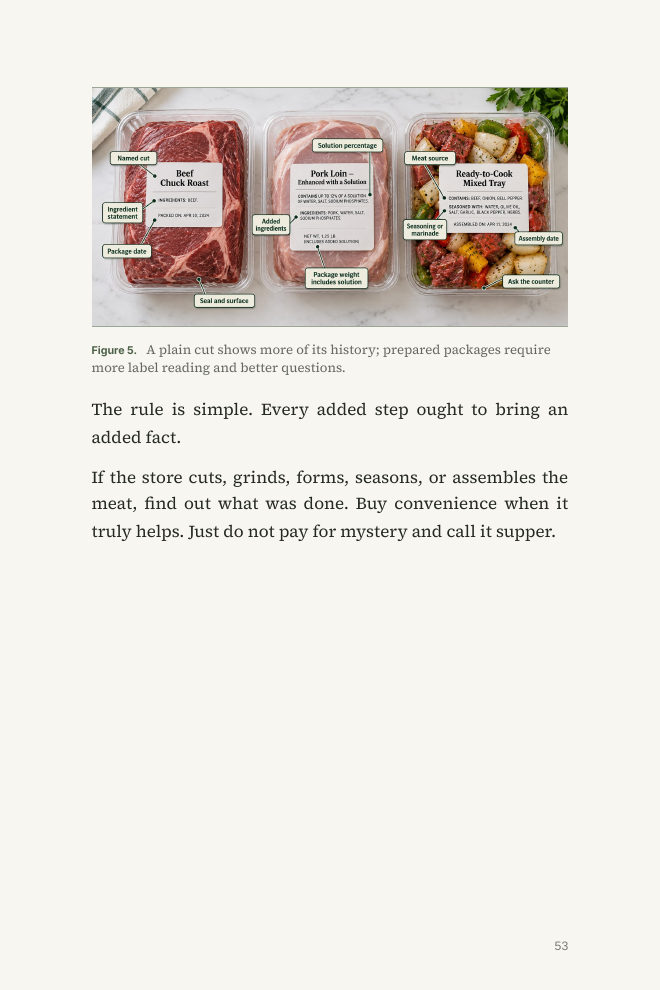
At the Counter is the shopping book: 90 pages and 10 chapters for reading labels, inspecting packages, comparing usable value, and asking the meat counter a clear question. “Start With the Package, Not the Picture” identifies the actual product before the advertising gets a vote. Later chapters explain color changes, retained water, ready-made trays, overlooked cuts, whole-cut requests, and better grinding instructions. I also tell the truth about mixed-trimming stew meat and other things I kept quiet about while working for the store. This is where to begin if the cold case leaves you guessing.

Selected chapters

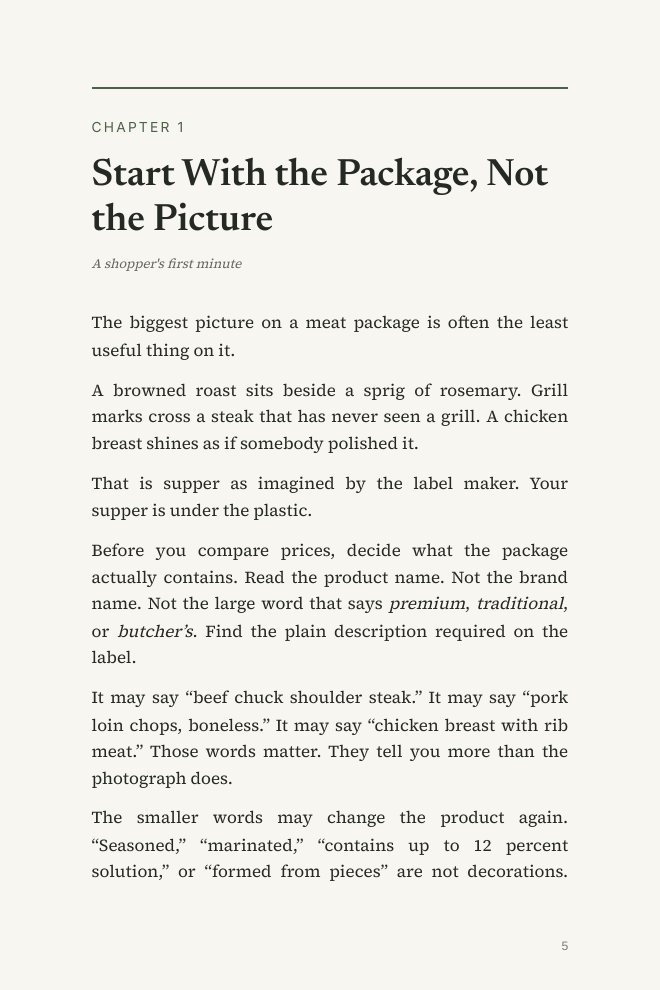
  1. Start With the Package, Not the Picture
  2. Read the Small Print Without Getting Lost
  3. The Wrap, the Tray, and the Cold Case
  4. Color Is a Clue, Not a Verdict
  5. When Water Is Part of the Weight
  6. What May Be Hiding in a Ready-Made Tray
  7. The Good Cuts People Walk Past
  8. Buy the Whole Cut and Let the Counter Work
At the Stove

The books / 02

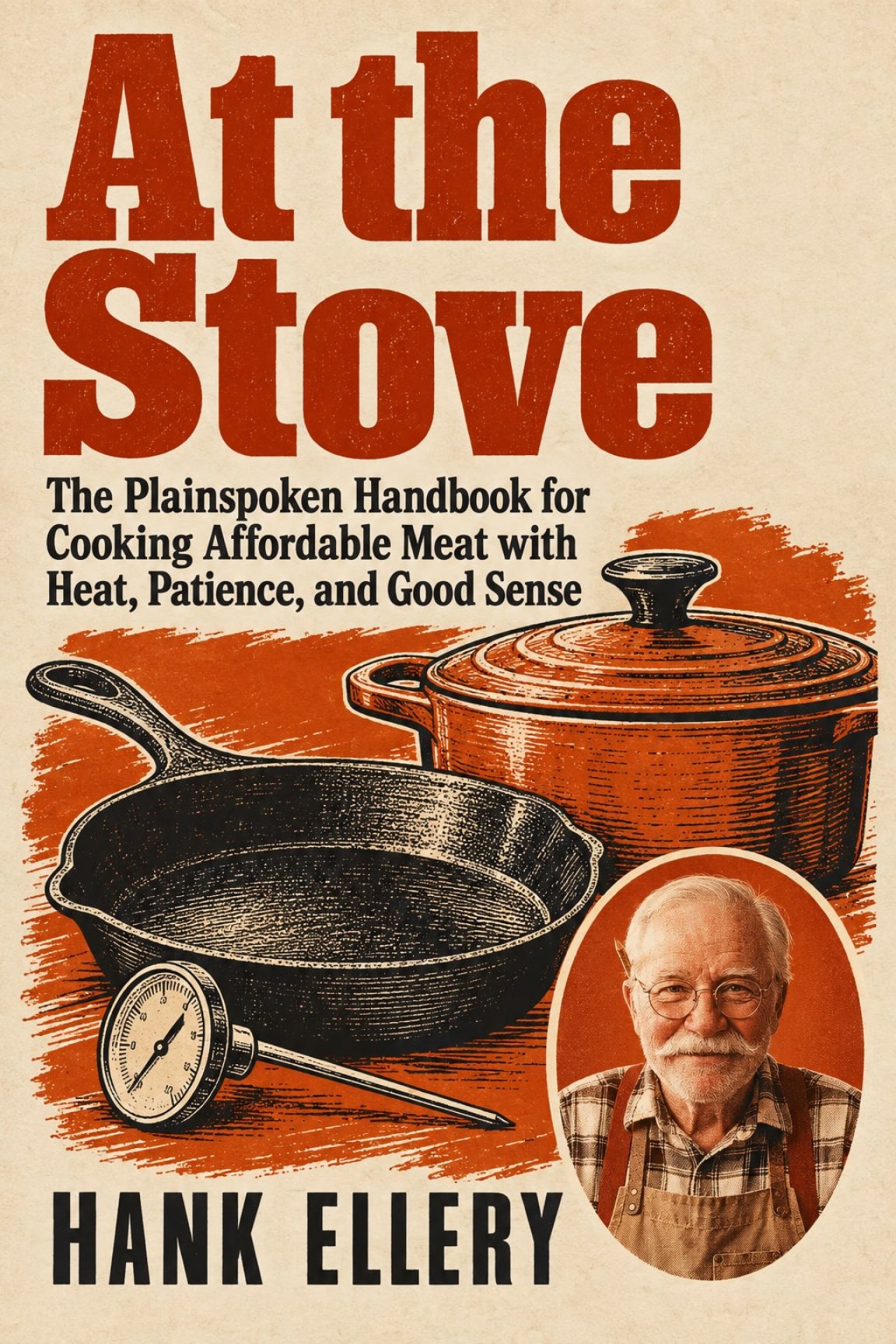
At the Stove

The Plainspoken Handbook for Cooking Affordable Meat with Heat, Patience, and Good Sense

Measure safety with a thermometer, then test tenderness as a separate matter.

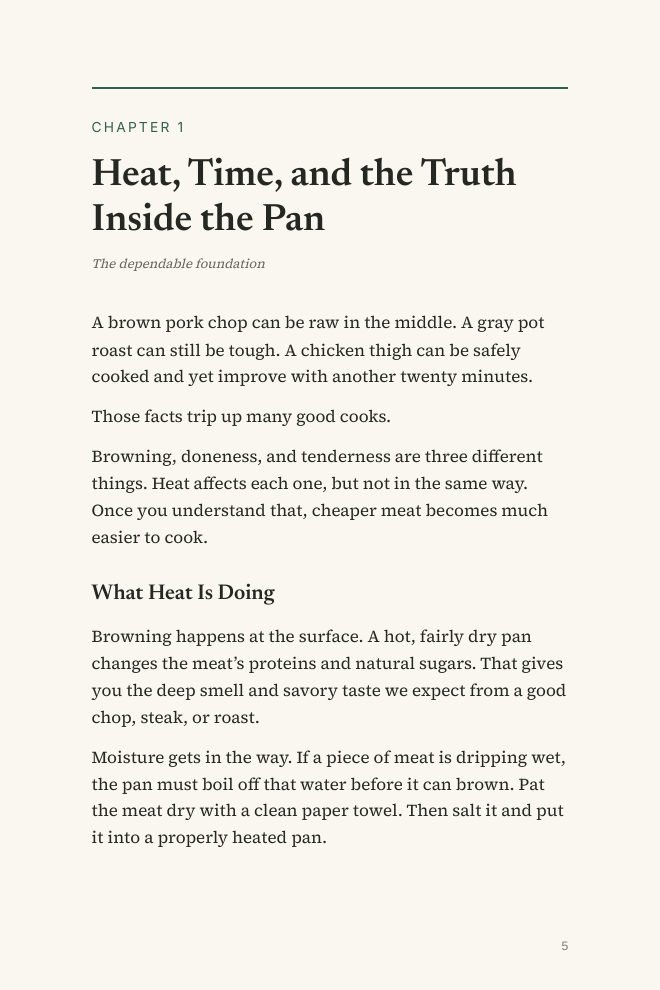
At the Stove is the cooking book: 81 pages and 11 chapters on heat, time, safe doneness, tenderness, resting, and slicing. It covers inexpensive steak, pot roast, stew, ribs, pork chops, chicken, burgers, meatloaf, bacon, and sausage. “Heat, Time, and the Truth Inside the Pan” separates browning from safety and tenderness. The Pork-Chop Method helps match the cooking approach to chop thickness. You will find practical thermometer guidance, including 145°F with a 3-minute rest for pork chops, 160°F for ground beef, and at least 165°F for poultry. Patience does more work here than fancy equipment.

Selected chapters

  1. Heat, Time, and the Truth Inside the Pan
  2. A Good Steak from a Working Cut
  3. Pot Roast Cannot Be Bullied
  4. Stew with Browned Edges and a Proper Gravy
  5. Ribs: Tender Is Not the Same as Falling Apart
  6. Pork Chops Without the Sawdust
  7. Chicken That Keeps Its Juice
  8. Burgers That Stay Loose and Juicy
At the Block

The books / 03

At the Block

The Plainspoken Handbook of Home Cutting, Freezing, Broth, Fat, and Sausage

Give every portion, bone, and useful trimming a clean purpose, a tight wrap, and a clear label.

At the Block is the keeping book: 82 pages and 9 chapters for clean home cutting, portioning, broth, saved fat, fresh sausage, wrapping, freezing, and thawing. “One Chicken, Eight Useful Pieces” follows the joints instead of hacking through heavy bone. Another chapter turns a whole pork loin into chops, roasts, and meal-size portions. You will learn to sort lean scraps, usable fat, bones, skin, and true waste before they become an unnamed freezer lump. The grease-jar chapter keeps the sound part of an old farm habit while correcting the unsafe part. Three safe thawing methods close the cycle.

Selected chapters

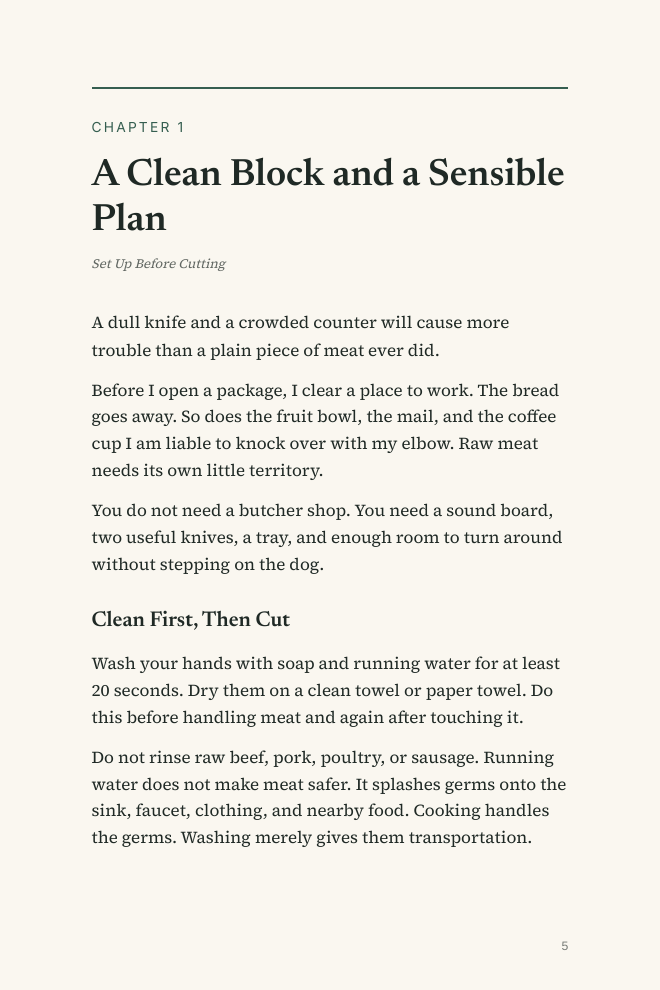
  1. A Clean Block and a Sensible Plan
  2. One Chicken, Eight Useful Pieces
  3. Turn a Whole Pork Loin Into Planned Meals
  4. Fresh Sausage Without Fancy Machinery
  5. Sort the Trimmings Before They Become Waste
  6. Broth From Bones Worth Saving
  7. The Grease Jar Done Right
  8. Wrap It for the Freezer You Actually Own
Get all 3 books $29

Instant download · Read on your phone, tablet or computer, or print the pages

Selected chapters

From the cold case to the supper table

The three books follow the meat in a sensible order. First choose it, then cook it, then learn the cutting and keeping skills that make the next purchase go farther.

  1. 1. Start with At the Counter

    Read the product name, net weight, ingredient statement, safe-handling panel, and package condition. Then use the book’s exact counter scripts to request thickness, trim, grind, or package size.

  2. 2. Move to At the Stove

    Match direct or gentle heat to the cut. Use the thermometer for safety, allow tough meat enough time to soften, and slice across the grain when the method calls for it.

  3. 3. Keep more with At the Block

    Break down a chicken, portion a pork loin, sort trimmings, make broth or fresh sausage, save clean rendered fat, and wrap the remaining portions for an ordinary home freezer.

Get all 3 books $29

Instant download · Read on your phone, tablet or computer, or print the pages

Look inside

See the work before you buy

Open a page and read it. The samples show the actual teaching style: package language examined word by word, browning separated from doneness and tenderness, and a raw-meat work area cleared and made safe before the knife comes out.

3 Books · 253 Pages · 30 Chapters · 6 Methods · 7 Tables · 6 Checklists · 21 Glossary terms

Page 5 — Start With the Package, Not the Picture
Page 5 — Start With the Package, Not the Picture ↗
Page 53 — What May Be Hiding in a Ready-Made Tray
Page 53 — What May Be Hiding in a Ready-Made Tray ↗
Page 5 — Heat, Time, and the Truth Inside the Pan
Page 5 — Heat, Time, and the Truth Inside the Pan ↗
Page 5 — A Clean Block and a Sensible Plan
Page 5 — A Clean Block and a Sensible Plan ↗
Get all 3 books $29

Instant download · Read on your phone, tablet or computer, or print the pages

What you get

All three books, in working order

You receive At the Counter, At the Stove, and At the Block in PDF and EPUB formats. Together they contain 253 pages, 30 chapters, 6 methods, 7 tables, 6 checklists, and 21 glossary terms covering the trip from package to pan to freezer.

At the CounterAt the StoveAt the Block

Your order

The Old Butcher's Counter

$29

3 e-books · 253 pages · PDF and EPUB

3 Books · 253 Pages · 30 Chapters · 6 Methods · 7 Tables · 6 Checklists · 21 Glossary terms

  • At the Counter · 90 · Instant download · Read on your phone, tablet or computer, or print the pages
  • At the Stove · 81 · Instant download · Read on your phone, tablet or computer, or print the pages
  • At the Block · 82 · Instant download · Read on your phone, tablet or computer, or print the pages
Get all 3 books $29

Instant download · Read on your phone, tablet or computer, or print the pages

Hank Ellery

From the author

Forty-one years behind a small-town meat counter

I grew up on a family farm in rural Missouri. We cooked on cast iron, saved what was worth saving, and did not mistake waste for prosperity. My mother kept a grease tin beside the stove. My father taught me knife work, freezer wrapping, and why a whole cut usually costs less than paying somebody else to portion it.

I spent 41 years cutting beef before the grocery doors opened, running the grinder, making sausage, slicing bacon, and wrapping freezer orders in plastic and paper. I knew regulars by name and standing order. Some old habits were wrong, and I say so here. A thermometer settles more arguments than a mustache ever did.

— Hank Ellery

This is for you if

Who I wrote this for

This is for you if

  • You want plain explanations of labels, cuts, heat, thermometers, knife work, wrapping, freezing, and thawing.
  • You buy ordinary beef, pork, chicken, or turkey and want to make sound use of affordable cuts.
  • You are willing to use a sharp knife carefully, keep a clean work area, and measure internal temperature instead of guessing.
  • You want three connected reference books rather than scattered tips you must arrange for yourself.

The Counter, Stove & Block Library

What you'll be able to do

AI-generated illustrations of potential readers.

Buy the cut, not the label

Words like "premium" and "butcher's choice" sell meat, they don't describe it. You'll learn to check the cut name, the weight, any added water, the bones and the packaging, so you know what you're really paying for before it goes in your cart.

AI-generated illustrations of potential readers.

Cook cheap cuts tender

The cheaper working cuts are often the tastiest, if you treat them right. You'll learn which heat suits which cut, how to brown without crowding the pan, how to check doneness with a thermometer, and when to give tough cuts the slow time they need.

AI-generated illustrations of potential readers.

Get more meals from every package

Buy whole cuts and portion them yourself, save the bones and fat that are worth keeping, wrap meat so the freezer doesn't ruin it, and thaw it the safe way. That's how a butcher's family stretched their meat.

AI-generated illustrations of potential readers.

Get all 3 books $29

Instant download · Read on your phone, tablet or computer, or print the pages

The Counter, Stove & Block Library

Questions

How are the books organized?

Three books, one job each. At the Counter is about buying: cuts, grades and labels. At the Stove is about cooking: heat, time and safe doneness. At the Block is about cutting and keeping: breaking down whole cuts, wrapping and freezing.

Do I need butcher or cooking experience?

No. The books begin with ordinary tasks: reading a package, setting up a clean board, placing a thermometer, finding the grain, and asking for a specific cut or grind. Experienced home cooks may still find that the label, freezer, and whole-cut chapters fill practical gaps.

Why do the three books belong together?

At the Counter helps you choose the meat and ask for it properly. At the Stove explains how heat, time, temperature, resting, and slicing affect it. At the Block shows how to portion, grind, save, wrap, freeze, and thaw it. Each book handles a different stage of the same purchase.

Why pay for the books when videos are free?

A video can demonstrate one task, but it does not hand you the complete ordered method. These three books organize 30 chapters from shopping through storage, with 7 tables, 6 checklists, 6 methods, and 21 glossary terms you can return to while standing at the counter, stove, or cutting board.

Does At the Counter tell me what to ask the butcher?

Yes. It gives specific language for requesting thickness, weight, trim, bone preference, grind, package size, and the return of useful pieces. It also explains when a fact can be found on the label and when the person behind the counter must answer it.

Are safe internal temperatures included?

Yes. At the Stove explains thermometer placement and distinguishes safe doneness from tenderness. Examples include pork chops at 145°F with a 3-minute rest, ground beef at 160°F, and poultry at a minimum of 165°F. It also explains why dark poultry meat may improve with further cooking.

Does At the Block require professional equipment?

The methods are written for an ordinary home work area. The opening chapter uses a sound cutting board, a sharp chef’s knife, a narrow boning or utility knife, a tray, clean-work habits, prompt chilling, and enough clear counter space to work safely.

What subjects are covered across the set?

The set covers labels, package condition, meat color, added solutions, value cuts, counter requests, grinding, steaks, roasts, stew, ribs, chops, chicken, burgers, meatloaf, bacon, sausage, home cutting, broth, rendered fat, freezer wrapping, and safe thawing.

Which file formats are included?

Each of the three e-books is available in PDF and EPUB format.

Put the whole purchase to honest work

Start with the label. Use the right heat. Check the temperature. Wrap what remains as though you paid for it, because you did. These three books keep that work in one sensible order.

Get all 3 books $29

PDF + EPUB